
Specialized Spine Surgery
Degenerative Spine Conditions & Spinal Deformity
Low back or neck pain, sciatica, numbness, or weakness in the arms or legs can profoundly affect your daily life,
sleep, and sense of safety. At Neuroknife, we begin with a careful clinical evaluation and a clear,
accurate interpretation of your imaging studies, so we can build a realistic, individualized plan —
designed to reduce pain, protect the nerves, and restore function.
We treat degenerative, deformity-related, and congenital spine conditions using modern, evidence-based
techniques — from targeted non-surgical care to minimally invasive procedures and, when required,
stabilization/fusion.
The spine at a glance
Common questions we address at every first visit.
What are degenerative spine conditions?
Over time, spinal discs can dehydrate and collapse, bone spurs may form, and problems such as a disc herniation or spinal stenosis can develop — potentially compressing nerve roots and/or the spinal cord.
What is spinal deformity?
Scoliosis, kyphosis, or a combination of both — often presenting in adulthood as degenerative scoliosis. Deformity may cause pain, functional limitation, and progressive changes in posture and balance.
What are osteoporotic fractures?
A vertebral compression fracture due to osteoporosis — often after a minor injury — causing sudden pain and, over time, loss of spinal height and progressive kyphosis.
When do we call it instability?
When the spine’s normal mechanical balance is disrupted — for example in spondylolisthesis, advanced degenerative changes, or following prior trauma or spine surgery.
What we treat at Neuroknife — clear indications & surgical precision
Our goal is: accurate diagnosis → the right indication → meaningful, realistic improvement. The “right” operation is not always the most complex one — it is the most appropriate one for you.
Disc herniation & sciatica
- Pain radiating down the leg
- Numbness/tingling
- Microdiscectomy when indicated
Spinal stenosis
- “Leg pain with walking” (neurogenic claudication)
- Reduced endurance/walking distance
- Targeted decompression
Spondylolisthesis
- Mechanical low back pain
- Radiculopathy/stenosis
- Stabilization when clearly indicated
Adult scoliosis
- Postural/alignment changes
- Pain & fatigue
- Personalized correction strategy
Osteoporotic fractures
- Sudden mid-back pain
- Height loss/kyphosis
- Kyphoplasty in selected cases
Failed back surgery
- Persistent pain after surgery
- Recurrence/instability/stenosis
- Root-cause analysis & realistic plan
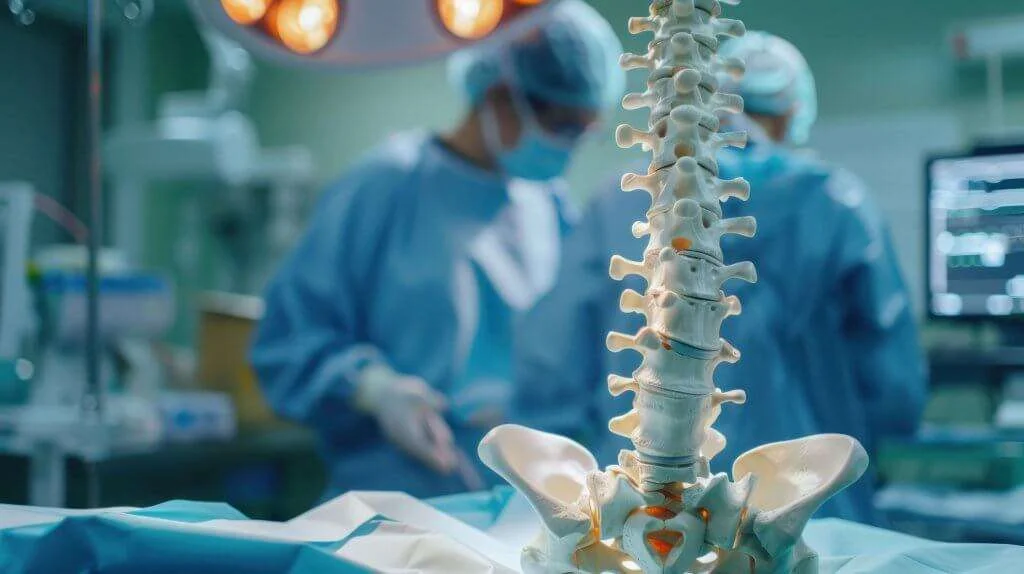
What is spine surgery?
Spine surgery addresses conditions that cause pain, instability, or compression of neural structures (the spinal cord and nerve roots). The goal is not simply to “remove a disc herniation,” but to protect the nerve, restore stability, and achieve meaningful functional improvement.
At Neuroknife, our strategy is grounded in the international literature, your individual anatomy, and a careful balance between a minimally invasive approach and long-term durability.
What are the symptoms? When should I seek help?
Pain & radiculopathy
- Persistent neck or low back pain
- Sciatica / cervical radiculopathy (pain radiating into an arm or leg)
- Numbness, burning, tingling
- Weakness or difficulty walking
Deformity & function
- Visible trunk shift or kyphosis
- Changes in shoulder/pelvic balance
- Fatigue, difficulty standing upright
- Back pain with progressive worsening
Emergencies
Seek urgent medical care if you develop:
- Sudden weakness in an arm or leg
- Loss of bladder or bowel control
- Severe pain after a fall or injury
How is the diagnosis made?
Diagnosis begins with a thorough history and a targeted neurological examination.
- MRI: disc herniations, stenosis, nerve compression, deformity assessment.
- CT & dynamic X-rays: bony pathology, instability, fractures.
- EMG: helps distinguish radiculopathy from peripheral neuropathy when needed.
We integrate imaging findings, clinical symptoms, and your functional goals to design a treatment plan that is realistic, personalized, and safe.
Your care pathway at Neuroknife
From your first evaluation through recovery, we follow a structured plan so you have a clear understanding of the “what,” “how,” and “why.”
Evaluation
History, neurological exam, and functional goals (pain, walking, mobility).
Imaging
MRI/CT/X-rays ± dynamic views when appropriate.
Treatment decision
Conservative care or surgery — recommended only when there is a clear indication.
Procedure
Targeted decompression and/or stabilization tailored to the specific diagnosis.
Recovery
Guidance, early mobilization, physical therapy, and ergonomics.
Follow-up
Scheduled check-ins, plan adjustments, and monitoring of functional progress.
When is surgery needed? When is monitoring enough?
Surgery is not necessary for every disc herniation or degenerative deformity. Decisions are individualized based on your symptoms, neurological findings, and quality of life.
Milder symptoms without neurological deficit
- Pain with activity/movement but no weakness
- No progressive deterioration
- Physical therapy, ergonomics, medications ± targeted injections
Persistent pain or neurological deficit
- Radiculopathy that persists despite appropriate treatment
- Weakness (e.g., foot drop), difficulty walking
- Severe stenosis/nerve compression with risk of permanent injury
Failed back surgery & major deformity
- Persistent symptoms after prior surgery
- Instability, recurrence, or multi-level degeneration
- Need for hardware revision or more extensive stabilization
Frequently asked questions (FAQ)
The most common questions we hear from patients with degenerative spine conditions.
1) When is it “urgent” to be seen?
When there is sudden weakness, loss of bladder/bowel control, or severe pain after an injury.
2) Is an MRI enough for diagnosis?
MRI is a core diagnostic tool, but it should always be interpreted alongside a clinical exam and functional assessment.
3) What does “stenosis” mean?
Narrowing of the spinal canal or foramina that can compress nerves and cause pain, heaviness, or fatigue with walking.
4) When does conservative treatment help?
For mild to moderate symptoms without progressive weakness — with a plan for physical therapy/ergonomics and targeted medical management.
5) When do you recommend surgery?
When there is a neurological deficit, persistent radiculopathy despite appropriate treatment, or anatomical compression with a high risk of permanent injury.
6) Is a microdiscectomy a “major” surgery?
It is typically a focused operation with a small incision and limited surgical burden. The indication and proper technique matter more than the label.
7) When is stabilization/fusion necessary?
When instability is present, in significant spondylolisthesis, or when decompression requires structural support for long-term safety and durability.
8) What does “failed back surgery” mean?
Persistent or recurrent symptoms after a prior spine operation — requiring careful root-cause analysis and a realistic plan.
9) How soon will I notice improvement?
Pain often improves early, while nerve recovery may take weeks to months depending on the duration and severity of compression.
10) Will the surgery be painful?
It depends on the procedure. After uncomplicated microdiscectomy, significant postoperative pain is not expected. Pain is typically well controlled with a clear analgesia plan and guidance on safe mobilization and activity.
11) When can I return to work?
It depends on the procedure and the type of work you do. We provide an individualized plan for a safe, gradual return.
12) What should I bring to my appointment?
MRI/CT/X-rays, a medication list, symptom duration, and any prior treatments or surgeries.
Selected degenerative spine conditions we treat at Neuroknife
The sections below cover key categories of degenerative spine conditions managed by the Neuroknife team. Each page provides detailed, evidence-based guidance: symptoms, diagnostic evaluation, treatment options, recovery, and follow-up.
Degenerative & congenital
Deformity & special situations
Need an expert evaluation for a spine condition?
Send your MRI/CT or schedule an appointment with the Neuroknife team for a thorough, human-centered, individualized discussion of your case.
© Neuroknife — Original medical content authored by our physicians, provided exclusively for patient education and information.