Neuroknife pediatric care
Pediatric Neuro-
surgery
& Neonatal
Neurosurgery
Specialized pediatric neurosurgical care for newborns, infants, children, and adolescents, with experience from Boston Children’s Hospital (Harvard University) and a central role in organizing pediatric surgical care at MITERA Hospital.
Pediatric neurosurgery at a glance
Three core categories of questions we address at every first visit with parents.
Neuroknife — Who this is for
Newborns, infants, children & adolescents with congenital anomalies, hydrocephalus, CNS tumors, epilepsy, trauma, or spinal conditions. Care is tailored to age and developmental stage.
What we provide
Specialized neurosurgical evaluation, targeted imaging (MRI/CT/ultrasound), multidisciplinary review, and a personalized plan for treatment and follow-up.
Where children are admitted
In a dedicated pediatric environment at MITERA, with NICU, pediatric wards, pediatric anesthesiologists, and specialized nursing staff.
What we treat — with a clear plan and microsurgical precision
Below are key categories of conditions. In every case, the goal is: the right diagnosis → the right indication for treatment → meaningful, measurable improvement.
Gliomas and other pediatric tumors
- Focused preoperative evaluation
- Multidisciplinary treatment coordination
- Clear counseling & structured follow-up
Myelomeningocele & Congenital Malformations
- Closure of myelomeningocele and congenital defects
- Treatment of neural tube malformations
- Surgical correction of lipomyelomeningocele & treatment of tethered cord
Drug-resistant epilepsy & pediatric epilepsy surgery
- Collaboration with pediatric neurology & specialized evaluation
- Clear documentation before every decision
- Goal: functional improvement & safety
Hydrocephalus & endoscopic surgery (ETV, shunts)
- Targeted imaging & pediatric anesthesia care
- Endoscopic techniques when indicated
- Structured long-term surveillance
Craniosynostosis & craniofacial malformations
- Assessment of skull growth & neurodevelopmental trajectory
- Close collaboration with a craniofacial team
- A clear plan for monitoring or intervention
Chiari malformation & syringomyelia
- Clinical assessment of symptoms & function
- Targeted MRI — when indicated
- Decompression surgery when benefit is documented
What is Pediatric Neurosurgery?
Pediatric neurosurgery is not a “smaller version” of adult neurosurgery. It is a distinct, demanding subspecialty focused on the developing brain & spinal cord—from pregnancy through adolescence.
Evaluation includes a detailed clinical exam, analysis of imaging (MRI/CT/US), and, when needed, multidisciplinary review with pediatric neurologists, neonatologists, pediatric oncologists, pediatric orthopedists, craniofacial surgeons, and other specialists.
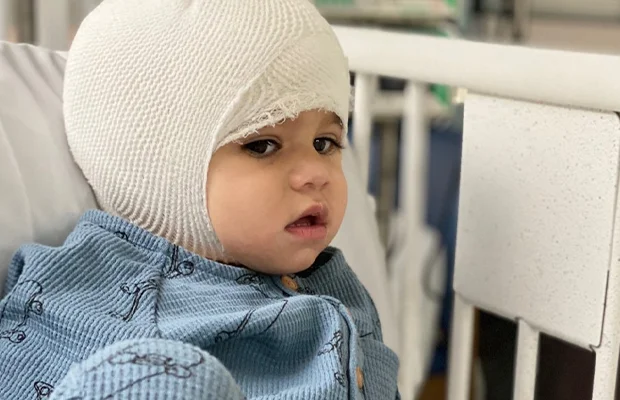
What makes pediatric neurosurgery different from adult care?
A pediatric patient is not simply a “small adult.” A child’s brain is continuously developing, with open cranial sutures, evolving neural connections, and distinct sensitivity to anesthesia & surgical stress.
For that reason, care should be delivered in an organized, specialized pediatric neurosurgical setting, in close collaboration with pediatric anesthesiologists, neonatologists/pediatricians, and NICU & pediatric ICU support when needed.
When should I seek a neurosurgical evaluation? Symptoms that warrant assessment
Many symptoms in children are benign. However, when something is persistent, progressively worsening, or concerning, a proper evaluation provides a clear plan and peace of mind for families.
Neurologic symptoms
- Persistent headaches (especially morning) or vomiting without a gastrointestinal cause
- Seizures or episodes of “staring spells”
- Behavioral change, excessive sleepiness, decline in school performance
Mobility & development
- Developmental delay, unsteady gait, frequent falls
- Limb weakness, limping, or progressive stiffness
- Back pain with neurologic signs or deformities
Contact us urgently if:
- There is marked sleepiness, confusion, or neurologic deterioration
- New weakness, speech changes, or gait disturbance occurs
- There is head trauma with persistent vomiting or excessive sleepiness
How is the diagnosis made?
Diagnosis is based on a clinical evaluation (child-centered and guided by the child), pregnancy/developmental history, and selecting the right tests only when there is a clear indication.
- MRI: the primary CNS study when detailed imaging is required.
- CT: used in emergencies or trauma, with careful attention to radiation dose.
- Ultrasound: in newborns (through the fontanelle) or selected cases.
- EEG / pediatric neurology evaluation: when seizures or seizure-like episodes are present.
Our goal is a clear, practical care plan: what is most likely, what we rule out, what we monitor, and when intervention is truly needed.
Your first visit with us
Our goal is a calm, understandable experience for parents and children, with time for questions and clear next steps.
- A calm, family-centered setting. Without an intense “hospital” feel.
- Time for questions. Thorough discussion without rushing, with clear explanations.
- Careful examination. Respectful of your child’s age and temperament.
- Written plan. You receive a written summary & options.
Your child’s care pathway at Neuroknife
From the first visit to structured follow-up, we work with an organized plan so you have a clear understanding of the “what,” “how,” and “why.”
Evaluation
Detailed discussion with parents, a child-friendly examination, review of prior studies & photos (e.g., skull shape, gait).
Targeted testing
Pediatric-compatible imaging (MRI/CT/EEG/US), with minimal radiation exposure and, when possible, without sedation.
Multidisciplinary discussion
Collaboration with pediatric neurologists, pediatric orthopedists, neonatologists, ENT, craniofacial/plastic surgeons & MITERA anesthesiologists for complex cases.
Care plan decision
Monitoring or surgery — with clear rationale, alternatives, and realistic expectations. A written recommendation with clear explanation of options (surgery, observation, second opinion), in language understandable to parents & children.
Treatment & hospitalization
Surgery in a specialized pediatric surgical environment, with organized postoperative monitoring, NICU, pediatric ICU support, breastfeeding support, and psychological/developmental counseling when needed.
Structured follow-up
Long-term follow-up, growth and development monitoring, school reintegration, and overall quality of life.
Why choose the Neuroknife team for your child?
Choosing a pediatric neurosurgical team is not only about surgical technique. It is about expertise, experience, the right infrastructure, safe anesthesia, and a truly human approach for both the child and the family.
Subspecialty training at a leading center
Fellowship training in Pediatric Neurosurgery at Boston Children’s Hospital – Harvard, with experience in complex neonatal & pediatric cases.
A fully integrated pediatric environment
Surgery within MITERA’s pediatric operating suites, supported by pediatric anesthesiologists, NICU, pediatric wards & a specialized nursing team.
Multidisciplinary approach
Collaboration with pediatric neurologists, neonatologists, pediatric orthopedists, craniofacial/plastic surgeons, ENT, geneticists & psychologists, when necessary.
Long-term care
Structured follow-up through adulthood, with emphasis on development, school reintegration, and overall quality of life.
Frequently Asked Questions (FAQ)
The most common questions we hear from parents during pediatric neurosurgical evaluations.
1) When is it “urgent” to be seen?
When there is neurologic deterioration, new weakness, significant sleepiness/confusion, persistent vomiting with headache, or serious head trauma.
2) Does my child always need an MRI?
No. We recommend tests only when there is a clear indication. In many cases, the clinical picture and observation are sufficient.
3) Is CT radiation safe?
Low-dose CT is used only when necessary (e.g., emergency surgery, trauma). Our goal is the lowest reasonable exposure using appropriate pediatric settings.
4) If sedation is needed for MRI, what should we expect?
This is done with a pediatric anesthesia team and safety protocols. A pre-anesthesia evaluation and counseling always come first.
5) Will surgery be “definitely” necessary?
No. Many conditions are managed with monitoring. Surgery is recommended only when there is a clear indication and a well-documented benefit.
6) What does “monitoring” mean in practice?
A structured schedule of follow-up visits, clinical evaluation and/or repeat imaging, with clear criteria for when we change strategy.
7) How often is a multidisciplinary team involved?
Often—especially for complex cases (e.g., epilepsy, hydrocephalus, craniofacial anomalies, genetic syndromes). The goal is a comprehensive plan.
8) How long will my child stay in the hospital?
It depends on the diagnosis and procedure. We provide a specific estimate (length of stay, pain control, mobilization, nutrition, and return to school).
9) Can we stay with our child?
Absolutely. In most cases we encourage parents to remain with the child, while following the institution’s safety policies.
10) What about school and activities?
We provide clear guidance for returning to daily activities (school, sports), tailored to the condition and treatment.
11) What should we bring to the appointment?
Studies (MRI/CT/EEG), growth/development records, a medication list, and a brief description of symptoms.
12) Can you evaluate my child “online” with studies (telemedicine)?
Yes. We offer a fully integrated telemedicine platform, through which you can submit studies digitally and receive an initial assessment or a specialized second opinion. Our team will meet with you online to discuss the diagnosis, treatment options, and guide you on whether travel to Athens is necessary.
PEDIATRIC CONDITIONS WE TREAT
Pediatric Neurosurgery — areas of expertise
The Neuroknife team provides comprehensive care across the full spectrum of pediatric and neonatal neurosurgical conditions, in collaboration with MITERA’s pediatric wards and NICU, as well as the Athens Pediatric Center. You can read in detail about each category of conditions we treat at Neuroknife:
Brain & spine tumors
Congenital disease & malformations, genetic syndromes
Craniofacial disorders, vascular disease & hydrocephalus
Epilepsy, movement disorders, infections & trauma
Not sure which category fits your child? Contact the Neuroknife team for personalized guidance.
© Neuroknife — Original physician-authored medical content, provided exclusively for patient education and information.
Looking for a clear answer and a treatment plan for your child?
You can schedule an appointment or send your studies for a specialized second opinion. You will receive clear guidance, realistic options, and well-organized next steps.
© Neuroknife — Original physician-authored medical content, provided exclusively for patient education and information.